

The weekly status meeting had 14 people on the call. Two had their cameras off. Three were typing. And when I asked a simple question about the roadmap, the silence lasted long enough that I started checking whether my microphone had died.
That was the moment I understood something about sustainable leadership communication strategies for remote teams: the problem is rarely that people don't communicate. It's that they communicate in a way nobody can sustain for months, let alone years. You can run a team on adrenaline and back-to-back calls for about six weeks. After that, the cracks show—missed details, quiet disengagement, and a slow drift where the loudest people set the agenda.
The word "sustainable" is doing a lot of work here, and it's the part most leadership advice skips. Sustainable doesn't mean nice. It means a communication rhythm your team can keep running without burning out, and one that survives the departure of any single person.
Key Takeaways
- Asynchronous by default, synchronous by exception is the only communication cadence that scales past a handful of people.
- Write down your channel rules. An undocumented norm is just a rumor.
- Measure participation quality, not attendance. Quiet meetings are data.
- Protect long blocks of uninterrupted time as deliberately as you protect deadlines.
- Sustainable communication depends on documentation, not on you being present.
Why sustainable communication changes how you lead a remote team
In an office, communication leaks happen by accident. You overhear a conversation. You catch a colleague's expression after a decision lands. A lot of context travels without anyone deciding to send it.
Remote work removes that ambient channel. Everything has to be intentional—which sounds efficient until you realize the volume of intentional communication required is enormous. Every clarification, every piece of feedback, every "here's where we stand" becomes a message someone has to write, read, and process.
The hidden cost of overcommunication
Here's where I'd push back on the standard advice. "Overcommunicate" is a popular remote-work mantra, and I followed it religiously when I first managed a distributed team. The result was the opposite of what I wanted: message fatigue. People stopped reading carefully because most messages didn't seem to matter.
The fix wasn't less communication. It was prioritized communication—fewer channels, clearer signals, and a shared understanding of what deserves a notification.
- Urgent + needs discussion → live call, immediately
- Important + doesn't need discussion → written doc, reviewed within a day
- Useful context → async post, no expectation of immediate response
- Everything else → doesn't get sent
Build a communication charter your team can actually keep
A written charter sounds bureaucratic. In practice, it removes dozens of small daily judgments about where to post, who to tag, and how fast to reply. That mental overhead is exactly what makes remote communication unsustainable over time.
What belongs in the charter
Keep it short. A page is plenty. The point is agreement, not completeness.
- Which channels exist and what each is for—one tool per purpose, not three chat apps competing for attention
- Expected response windows: "same day" for direct messages, "next morning" for async threads
- Meeting norms: agenda shared beforehand, notes published after, no meeting without a written outcome
- Quiet hours and notification expectations across time zones
- Where decisions get recorded so nobody has to scroll back through a chat history to find the answer
I'll admit: the first version of our charter was three pages long and nobody read it. We cut it to a single table, pinned it in the main channel, and referenced it whenever someone broke a norm. Usage stuck.
| Channel | Best use | Response expectation |
|---|---|---|
| Chat | Quick questions, coordination, social check-ins | Same day |
| Async docs | Proposals, decisions, detailed feedback | Within one working day |
| Live video | Debate, onboarding, relationship building | Booked in advance, agenda required |
| External communication, formal records | Two working days |
Make asynchronous communication the default
Ask a distributed team what kills their week and you'll hear the same answer: meetings that could have been a document. Every synchronous meeting costs the number of attendees multiplied by the duration, and it fragments focus time into unusable slivers.
How to shift the balance without losing people
My rule of thumb: if the goal is to share information, write it. If the goal is to resolve disagreement or build trust, meet. Most recurring meetings exist to share information, so most recurring meetings can go.
When we cut our standing meetings from nine to three per week, the surprising outcome wasn't lost alignment. It was that written updates got sharper, because people knew the doc was the only place the context would live. Response quality improved within roughly three weeks.
But don't swing too hard. Async-only teams lose the small collisions that build relationships, and new hires suffer most because they can't absorb context they don't know to look for. Keep one recurring meeting that exists for connection rather than coordination, and defend it.
Measure participation, not attendance
Attendance tells you almost nothing. A silent call with 100% attendance can be a warning sign; a messy call with real debate might be the opposite.
Signals worth tracking
- Who speaks in group settings—if the same three people dominate every call, your team isn't really communicating
- Response depth in async threads: are people replying with insight or just reactions?
- How often decisions get re-opened because they weren't documented clearly
- Whether new hires ask questions in public channels or take them to private messages—the second pattern usually means your norms feel unsafe
None of this requires sophisticated tooling. A simple monthly review of the last four weeks, done honestly, will tell you whether your communication is sustainable or just surviving.
Protect focus time as a leadership duty
This is the part leaders underrate. Deep work is what produces good communication in the first place—people who never get uninterrupted time write vague updates, forget details, and default to calling a meeting.

On my current team, we block two hour-long windows of no-meeting time every day. Not "suggested." Blocked in the calendar and defended in practice. When a client asked for a call during one of those windows, I offered two alternatives rather than bending. The client didn't mind. Teams notice whether you enforce your own norms, and they copy your behavior far more than your words.
The focus-time math worth doing
Ask yourself a simple question: how many consecutive hours of uninterrupted time does each person on your team get on a typical day? If the answer is fewer than two, your communication setup is consuming more than it produces.
Documentation is the real communication skill
Weak leaders treat documentation as administrative overhead. Strong remote leaders treat it as the primary channel—because in a distributed setup, an undocumented decision is effectively invisible to anyone who wasn't on the call.
What changes when documentation becomes a norm? Fewer repeat questions, faster onboarding, and less dependence on any single person's memory. Which, incidentally, is what "sustainable" means in practice: it survives turnover.
- Every decision gets a one-line owner, date, and rationale
- Meeting notes go out the same day, not the same week
- Anything discussed twice becomes a document
- Written updates carry a summary sentence at the top, so people can decide whether to read further
Honestly, this discipline is the least glamorous part of leading remote teams. It's also the one that determines whether your communication holds up when the team doubles in size.
What about teams spread across different time zones?
Time-zone spread forces the sustainability question earlier, which is arguably an advantage. When overlap is limited, you cannot rely on presence, so the written channel becomes primary by necessity.
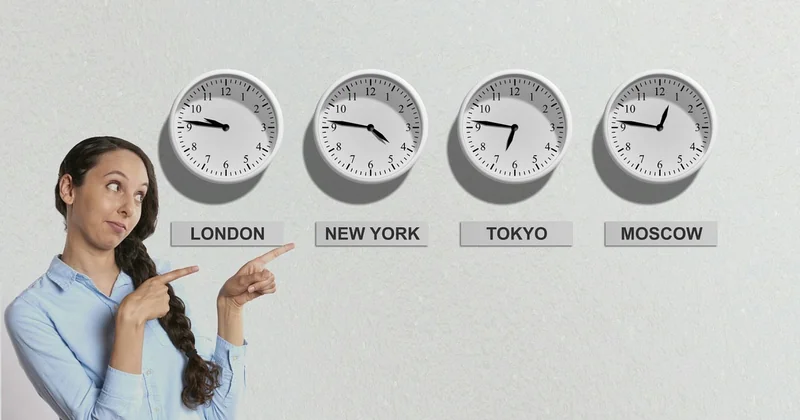
Practical adjustments for time zone spread
Rotate live meeting times so the same region isn't always joining at midnight. Publish a shared overlap window and protect it for the conversations that genuinely need to happen live. And explicitly state that asynchronous replies carry no status penalty—if your fastest repliers get rewarded and your slower region gets sidelined, your culture will drift toward whoever happens to be awake.
One more thing worth saying plainly: the leader's response pattern sets the ceiling. If you post at 11 p.m. and expect acknowledgment, your team will match that, and the schedule becomes unsustainable regardless of what your charter says.
The question I keep coming back to
Every remote communication system eventually reveals what it's built on. Build it on urgency and constant availability, and it works right up until the first person burns out. Build it on written clarity, predictable rhythms, and protected focus, and it keeps running when you step away for a week.
So here's the test I now apply to any new communication habit before rolling it out: if I disappeared for seven days, would this practice still hold? If the answer is no, it isn't a system. It's a dependency.
That's the difference between communication that gets you through the quarter and communication your team can actually live with.


